

Blog
Leather care
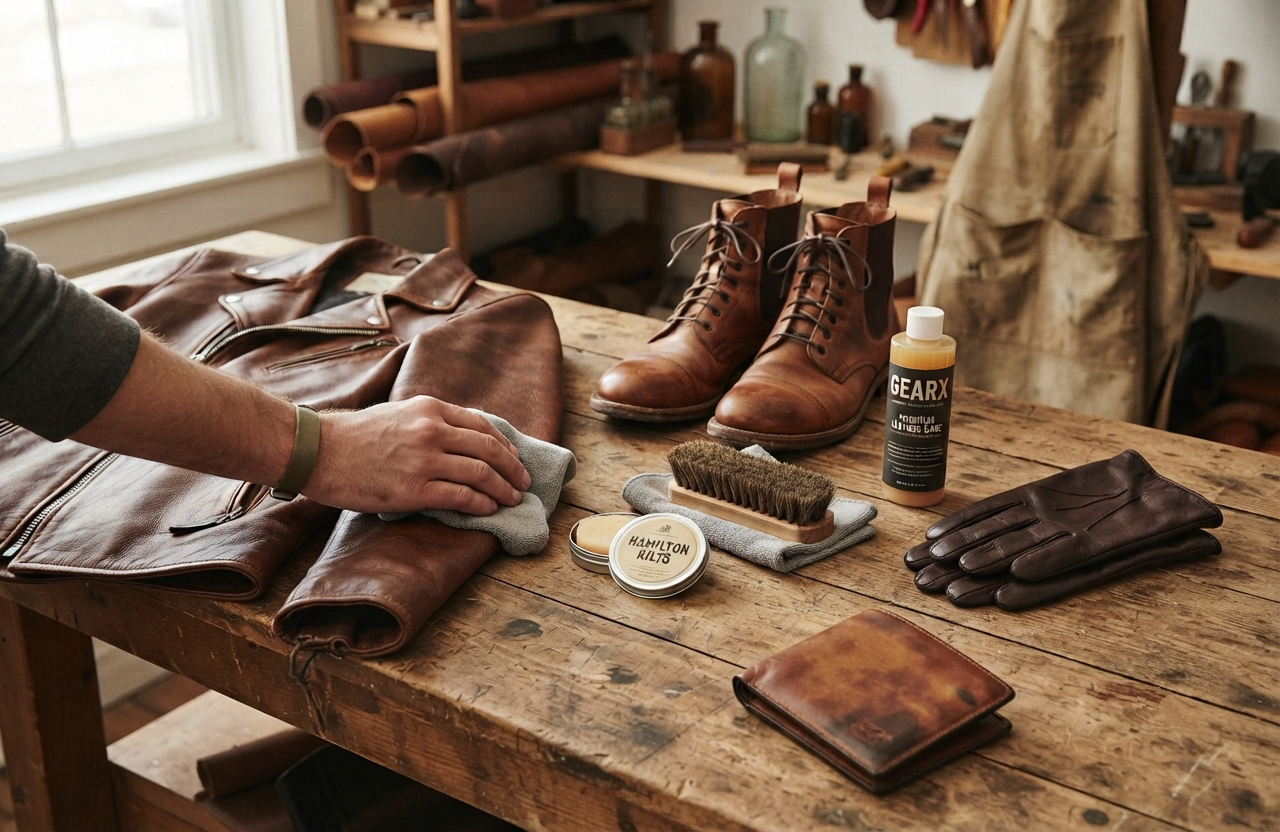
The Complete Leather Care Guide: How to Maintain Jackets, Shoes, Gloves & Wallets
Leather is timeless, durable, and luxurious. Whether it’s a rugged motorcycle jacket you wear on every ride, a trusty pair of leather boots, winter riding gloves, or your everyday leather wallet, high-end leather goods are built to last. However, natural hide requires regular maintenance to withstand daily wear, moisture, and drying out.
Because different leather items endure different types of stress—from pocket friction to road grit—they require tailored maintenance strategies. In this comprehensive guide, we break down everything you need to know to clean, condition, and protect every leather item in your wardrobe.
The Universal Rules of Leather Care
Before diving into item-specific routines, keep these three foundational rules in mind for all leather goods:
-
Never use harsh chemicals: Avoid dish soap, bleach, alcohol wipes, or household cleaners, which strip natural oils and ruin the finish.
-
Always air-dry naturally: Never use direct heat sources like hair dryers, radiators, or direct sunlight to dry wet leather.
-
Test new products first: Always apply a leather cleaner or conditioner on a hidden seam or interior patch to check for color-darkening.
1. How to Care for Leather Jackets
Leather jackets are an investment piece. Because they cover a large surface area and face everything from highway wind to sudden rain showers, they need seasonal attention.
-
Cleaning: Wipe down the exterior with a soft microfiber cloth slightly dampened with a mild soap solution (like castile soap and water). Pay close attention to collar lines and cuffs where body oils accumulate.
-
Conditioning: Apply a high-quality leather conditioner as needed to keep the hide supple and prevent cracking along high-flex zones like the elbows and shoulders.
-
Storage: Always hang your jacket on a wide, contoured wooden hanger to preserve the shoulder structure. Never store it in a plastic garment bag, as leather needs to breathe; opt for a breathable cotton garment bag instead.
2. How to Care for Leather Shoes and Boots
Footwear takes the harshest beating of all leather goods, facing mud, scuffs, puddles, and pavement salt.
-
Daily Maintenance: Brush off loose dirt and dust after every wear using a soft horsehair brush. For suede or nubuck, use a specialized crepe brush.
-
Addressing Scuffs and Water Stains: Buff out minor scuffs with a microfiber cloth and a matching color wax polish. If your shoes get caught in the rain, stuff them with crumpled newspaper to absorb moisture from the inside while they air-dry.
-
Shape Retention: Insert cedar shoe trees immediately after taking your shoes off. Cedar absorbs lingering moisture and neutralizes odors while maintaining the shoe’s original form.
3. How to Care for Leather Gloves
Leather gloves—especially driving or motorcycle gloves—are subjected to constant hand friction, sweat, and exposure to the elements.
-
Inner and Outer Cleaning: Because gloves trap hand sweat on the inside, turn them inside out occasionally and wipe the lining gently with a damp cloth. Clean the exterior using a minimal amount of leather cleaner on a sponge.
-
Maintaining Flexibility: Never wring or twist leather gloves to dry them, as this distorts the finger stitching. Instead, lay them flat on a towel to air-dry. Apply a tiny amount of lightweight conditioner to keep the fingers soft and prevent splitting between the seams.
4. How to Care for Leather Wallets
Your wallet spends all day in a pocket, absorbing body heat, friction, and natural skin oils. Over time, this can cause the leather to darken unevenly or stretch out.
-
Empty and Dust: Once a month, empty your wallet entirely. Use a soft, dry brush or cloth to sweep out dust and debris from the card slots and cash compartments.
-
Light Conditioning: Because wallets interact closely with your skin oils, they need less conditioning than jackets or boots. Apply a tiny drop of neutral leather balm on a cotton swab or cloth once a year to nourish the outer fold and prevent edge cracking.
-
Avoid Overstuffing: Resist the urge to over-stuff card slots. Once stretched out, natural leather rarely shrinks back to its original tight form.
Summary Checklist for Long-Lasting Leather
-
Clean regularly to remove surface dust and grime.
-
Condition seasonally to replenish lost natural oils.
-
Protect with a breathable, water-repellent spray if worn outdoors frequently.
-
Store properly in cool, dry environments away from direct sunlight.
With just a few minutes of routine maintenance, your leather jackets, shoes, gloves, and wallets will develop a rich, stunning patina and last for decades.
 Motorcycle Jacket
 Motorcycle Vest
 Motorcycle Trousers
 Body Armor Base Layer
 Motorcycle Vest
 Kilts
Kilts Sporran
 Kilt Shoes
 Vest
Vest Gillie Shirt
 Hat
Hat Kilt Pin
 Belt Buckles
 Wool Scarf
 Wool Tie
 Tartan Tie
 Kilt Accessories
 Leather Gloves
 Textile Gloves
 Cycling Gloves